Table of Contents
Why Florida’s Shellfish Regulatory Framework Is Unlike Most Other Food Categories
Raw shellfish in Florida, including oysters, clams, mussels, and scallops, operate under a compliance framework administered by the Florida Department of Agriculture and Consumer Services (FDACS) Division of Aquaculture under the Comprehensive Shellfish Control Code, Chapter 5L-1 of the Florida Administrative Code. This is not the same regulatory track as general food manufacturing or food service in Florida. Shellfish processing in Florida has its own dedicated code, its own certification system, its own HACCP plan approval process, and its own Vibrio Control Management Plan with time-to-cooler requirements that operate with precision down to the hour of the day.
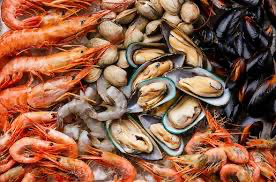
The FDACS Division of Aquaculture is the primary licensing and certification authority for shellfish processors and dealers handling oysters, clams, mussels, and scallops in Florida. The Florida Fish and Wildlife Conservation Commission (FWC) issues the Saltwater Products License with Shellfish Endorsement required for commercial harvesters. These are separate authorizations managed by separate agencies, and both must be in place in the appropriate form for a complete, compliant operation. Harvesters deliver product directly to certified processors: under Florida’s rules, shellstock cannot be delivered by harvesters or aquaculturists directly to restaurants or seafood markets. The certified processor is the required intermediate step in the supply chain.
Florida participates in the National Shellfish Sanitation Program, the federal and state cooperative framework recognized by the FDA and the Interstate Shellfish Sanitation Conference. FDACS’s shellfish inspection program is evaluated annually by the FDA to verify it meets NSSP minimum requirements. Certified Florida shellfish processors appear on the FDA’s Interstate Certified Shellfish Shippers List, and removal from that list, due to certification lapse or suspension, immediately affects the ability to sell into other states.
The Two-Track Licensing Structure Florida Shellfish Processors Must Navigate
Operating as a shellfish processor in Florida requires holding two separate documents: a Saltwater Wholesale Dealer License (or, for aquaculture operations, an Aquaculture Certificate of Registration) and a Shellfish Processing Facility Certification from FDACS’s Division of Aquaculture. Neither document alone is sufficient. The Shellfish Processing Certification Application (FDACS-15007) must be submitted with a copy of the applicable saltwater wholesale dealer license or aquaculture registration as a prerequisite to certification.
The Shellfish Processing Certification must be renewed annually. The renewal application must be received by FDACS no later than April 30 of each year to prevent a lapse in certification. A lapsed certification is not a minor administrative issue: it means the facility is not on the Interstate Certified Shellfish Shippers List, cannot legally ship shellfish to other states, and cannot be used as a receiving point for shellstock from harvesters until the certification is reinstated.
Certification renewal is also conditional on the facility’s inspection record. FDACS will not renew certification for any facility that has any Critical deficiency finding on its inspection record, more than two Key item deficiencies, or more than three Other item deficiencies outstanding at the time of renewal. Deficiency findings are classified as Critical, Key, or Other based on their public health significance. A Critical deficiency at inspection means the facility cannot be recertified until that finding is corrected and reinspected. For a business whose revenue depends on continuous certified status, a Critical finding at the annual recertification inspection is a serious operational event that demands immediate corrective action.
A key structural requirement for certification that catches new Florida shellfish operators off guard: the facility must possess a non-portable mechanical refrigeration unit capable of maintaining an ambient temperature of 45 degrees Fahrenheit or below and of sufficient size to handle one day’s production. This is not a recommendation. It is a required equipment specification for certification, and it is verified during every facility inspection. The 45-degree Fahrenheit ambient temperature standard in Florida’s refrigeration requirement is distinct from the 41-degree Fahrenheit standard used in many general food safety contexts, reflecting Florida’s Chapter 5L-1 shellfish-specific framework.
Florida’s Vibrio Control Management Plan and Why It Is the Most Operationally Demanding Compliance Element
The Vibrio Control Management (VCM) Plan is the centerpiece of Florida’s shellfish safety framework and the compliance requirement that creates the most operational discipline for certified processors and their harvester suppliers. Florida’s Gulf Coast waters are warm, and Vibrio species, including Vibrio vulnificus and Vibrio parahaemolyticus, are naturally abundant in those waters. Consuming raw shellfish contaminated with high Vibrio levels can cause severe gastrointestinal illness and, in the case of V. vulnificus infection in vulnerable individuals, septic shock and death at approximately 50 percent of cases. The VCM Plan’s time-to-cooler requirements are designed to interrupt the rapid proliferation of Vibrio in shellfish tissue that occurs when shellstock is held at warm temperatures after harvest.
Florida’s VCM requirements are specific to the time of year and create three distinct operational windows that certified processors and their harvester suppliers must understand precisely.
During the hottest summer months, oysters harvested in Florida must be placed in the cooler of a certified shellfish processing facility by 11:00 AM on the day of harvest. This is not the time when they are received at the dock; it is the time they must be inside the certified processor’s mechanical refrigeration. During the transition months of April and October, the deadline shifts to 1:00 PM of the harvest day. During the non-VCM winter months of November through March, shellstock must be delivered and refrigerated by 5:00 PM of the harvest day.
These are hard deadlines, not soft targets. Oysters that fail to meet the time-temperature requirements of the VCM Plan must be retagged by the processor as “FOR SHUCKING ONLY BY A CERTIFIED FACILITY” or “FOR POST HARVEST PROCESSING ONLY” before they can be moved forward in the supply chain. Product that fails the VCM time window and is not retagged appropriately is non-compliant under Chapter 5L-1 regardless of its visual appearance or sensory quality. VCM compliance records must document the harvest time, the delivery time, and the time the product was placed in refrigeration for every lot received during VCM months.
Your HACCP plan must document the total number of hours required to reduce the internal temperature of oysters to 55 degrees Fahrenheit or less in your specific facility, using your specific refrigeration equipment and production volumes. This is a facility-specific parameter that must be validated, not assumed. Overfilling your refrigeration unit during peak harvest periods can extend the time to reach the 55-degree internal temperature target, which has direct implications for whether your VCM compliance is maintained for specific lots received during high-volume days.
The Critical Control Points Florida Shellfish HACCP Plans Must Address
Florida’s Chapter 5L-1 requires that every certified shellfish processor have conducted a hazard analysis, have a written HACCP plan on premises, and have at least one person with HACCP training, knowledge, or experience capable of developing, reassessing, and modifying the plan and performing records review. Critically, the HACCP plan must receive written approval from FDACS before it is implemented. This approval requirement means you cannot begin processing until your HACCP plan has been reviewed and approved by the Division of Aquaculture.
Approved harvest area and source verification: All shellstock must originate from harvest areas currently classified as open and approved under Florida’s shellfish growing area program. FDACS manages Florida’s shellfish harvest area classifications in coordination with the state’s water quality monitoring program and the NSSP. Florida’s harvest waters can be closed in response to pollution events, red tide occurrences, environmental conditions, and seasonal management. Your HACCP plan must document how you verify that each incoming lot of shellstock originates from a currently open harvest area at the time of harvest. Receiving shellstock from a closed area is one of the most serious violations possible under the Comprehensive Shellfish Control Code.
VCM time-to-cooler compliance: This is the operational CCP that directly addresses the Vibrio hazard in Florida’s warm-water shellfish. Your HACCP plan must define the VCM time-to-cooler limits for each month of the year (11:00 AM, 1:00 PM, or 5:00 PM depending on season), document how you monitor compliance at receiving for each lot, and specify the corrective action when a lot arrives outside the VCM window. Receiving records must document the harvest time from the shellstock tag, the time the lot was received at your facility, and the time it was placed in mechanical refrigeration. These three data points are what an FDACS inspector reviews when assessing VCM compliance for specific lots during an inspection.
Cold storage temperature at or below 45 degrees Fahrenheit: All shellstock in your facility must be maintained at 45 degrees Fahrenheit or below throughout storage. Your HACCP plan must define the 45-degree critical limit, document how storage temperature is monitored and recorded, and specify the corrective action for any temperature deviation. Temperature monitoring records for cold storage must cover every operational day, including weekends and holidays when the facility may be unoccupied but product is being held.
Internal temperature reduction to 55 degrees Fahrenheit: Your HACCP plan must document the specific time required for your facility to reduce the internal temperature of received oysters to 55 degrees Fahrenheit or below, validated to your refrigeration equipment and your typical production volume. This is the time-to-temperature parameter FDACS reviewers look for when approving your HACCP plan, and inspectors verify that your actual practice matches the documented parameters.
Shellstock tagging and lot traceability: All shellstock must be properly tagged before being offered for sale. Dealer tags must be durable and waterproof, at minimum 2 5/8 by 5 1/4 inches, and must include all required information in legible form. Tags must be filed in chronological order and retained for 90 days. Your HACCP plan must document the tagging procedure for both incoming and outgoing shellstock and the record retention system that allows any specific lot to be located by date within seconds during an inspection.
Transport temperature maintenance: All shellfish leaving a certified Florida shellfish facility must be transported in an enclosed, mechanically refrigerated vehicle capable of maintaining an ambient temperature of 45 degrees Fahrenheit or below with doors closed securely. Your HACCP plan must address how transport temperature compliance is monitored and verified, including what records exist to demonstrate that product delivered to customers was maintained within the 45-degree limit during transit.
Staying in Compliance With FDACS Annual Recertification and Through Operational Changes
The annual recertification cycle is the structural framework around which Florida shellfish processors should organize their compliance calendar. The April 30 application deadline for recertification is firm. Given that recertification requires no outstanding Critical deficiencies and no more than two Key item deficiencies at the time of renewal, the practical approach is to treat every FDACS inspection throughout the year as a pre-recertification review and address any deficiency findings immediately rather than allowing them to accumulate.
HACCP plan reassessment is required whenever a change occurs that could affect the hazard analysis or the critical control points in your plan. Adding a new product type (such as moving from oysters only to also handling clams), changing your refrigeration equipment, modifying your production volume in ways that affect your time-to-temperature parameters, or changing your supplier relationships are all changes that may require HACCP plan revisions. Because your HACCP plan must receive written approval from FDACS before implementation, any material change to the plan requires submitting the revised plan to FDACS and receiving approval before the changed practice begins.
Florida’s warm climate creates year-round operational challenges that northern shellfish dealers do not face to the same degree. During Florida’s summer months, the 11:00 AM VCM cooler deadline creates a very compressed harvest-to-cooler window for harvesters working in the Gulf. If a harvester who typically delivers product that meets the VCM deadline encounters a vessel problem, traffic delay, or other disruption, the product arriving after the deadline must be handled under the “FOR SHUCKING ONLY” retag protocol rather than being accepted as standard shellstock. Your receiving procedures must be clear on this point, and your staff must understand that the VCM deadline is not a guideline with discretion.
The Deficiency Findings That Prevent Florida Shellfish Facilities From Being Recertified
FDACS’s inspection deficiency classification system, with Critical, Key, and Other categories, creates a specific compliance threshold for recertification that does not exist in many other food safety licensing frameworks. A Critical deficiency finding at a recertification inspection is an absolute bar to renewal until the deficiency is corrected and a reinspection confirms compliance.
The Critical findings most likely to appear at Florida shellfish processing facilities fall into three categories: VCM time-to-cooler records that cannot demonstrate compliance for specific lots received during VCM months, shellstock received from harvest areas that are not currently open under Florida’s harvest area classification, and HACCP plan deficiencies where the written plan does not match the actual process or where required monitoring records cannot be produced.
Key item deficiencies, which can prevent recertification if more than two are outstanding, include temperature monitoring records for cold storage that have gaps or that do not cover all operational days, transport records showing product was delivered in vehicles not meeting the mechanical refrigeration requirement, dealer tags that do not meet the required specifications, and 90-day tag file records that are incomplete or cannot be located for specific receiving dates.
The pattern underlying most compliance failures at Florida shellfish facilities is the gap between a written HACCP plan that was approved at the time of initial certification and operational practices that have drifted from the documented procedures over time. FDACS inspectors compare the approved HACCP plan to actual operations and to monitoring records. When they find that the plan says one thing and the records show another, the facility has a HACCP plan implementation deficiency regardless of whether the actual product was handled safely.
The inspection you just passed? It will happen again.
Florida operations are re-inspected regularly and every batch, temperature log, and corrective action needs to be documented every time. HACCPEasy Platform gives your team a digital compliance system so the next inspector visit is a non-event.
- ✓ Operators log batches, temps, and corrective actions in real time
- ✓ Require photo evidence of pH readings, equipment checks, or any critical step
- ✓ If-Then logic flags deviations and locks the workflow until resolved
- ✓ One tap exports your full 180-day audit history when an inspector walks in
Start your 30-day free trial — no credit card required
Bottom Line
Florida shellfish processors need both a Saltwater Wholesale Dealer License and a FDACS Shellfish Processing Facility Certification before handling shellstock commercially, and the HACCP plan must be approved by FDACS in writing before it is implemented. The VCM Plan creates hard daily time-to-cooler deadlines that change by season: 11:00 AM in summer, 1:00 PM in April and October, 5:00 PM in winter. Oysters missing the VCM window must be retagged for restricted use. Annual recertification requires no Critical deficiencies and no more than two Key deficiencies, making every FDACS inspection a recertification-relevant event. VCM compliance records, cold storage temperature logs, shellstock tags retained for 90 days, and harvest area verification for each incoming lot are what FDACS inspectors review. Operations that document every lot, every receiving event, and every temperature reading consistently are the ones that clear the April 30 recertification deadline without disruption.
FAQ
- What licenses do I need to process raw shellfish in Florida? You need two separate authorizations: a Saltwater Wholesale Dealer License from Florida FWC (or an Aquaculture Certificate of Registration if you are an aquaculture operation), and a Shellfish Processing Facility Certification from the FDACS Division of Aquaculture under Chapter 5L-1 of the Florida Administrative Code. You must hold the wholesale dealer license or aquaculture registration before you can apply for the processing certification. Commercial shellfish harvesters also need a Saltwater Products License with Shellfish Endorsement from FWC. All shellstock must be delivered by harvesters directly to a certified processing facility: it cannot go directly to restaurants or seafood markets.
- What are the VCM time-to-cooler deadlines for Florida oysters? Florida’s Vibrio Control Management Plan establishes three seasonal time-to-cooler deadlines for oysters to be placed in a certified processor’s mechanical refrigeration: by 11:00 AM during the hottest summer months, by 1:00 PM during the transition months of April and October, and by 5:00 PM during the non-VCM winter months of November through March. Oysters that miss the applicable deadline must be retagged as “FOR SHUCKING ONLY BY A CERTIFIED FACILITY” or “FOR POST HARVEST PROCESSING ONLY” before moving forward in the supply chain.
- Does my HACCP plan need FDACS approval in Florida? Yes. Florida’s Comprehensive Shellfish Control Code at 5L-1.005 requires that your HACCP plan receive written approval from FDACS Division of Aquaculture before implementation. You cannot begin processing under a new or revised HACCP plan until that written approval is in hand. Each certified shellfish facility must have someone with HACCP training to develop, reassess, and modify the plan. FDACS’s Division staff can assist in developing your plan, and the agency publishes a Guidebook for the Preparation of HACCP Plans for reference.
- What happens if my Florida shellfish processing certification lapses or is suspended? A lapsed or suspended certification means your facility is removed from the FDA’s Interstate Certified Shellfish Shippers List. You cannot legally ship shellfish to other states, and harvesters cannot legally deliver shellstock to your facility until certification is reinstated. The annual recertification renewal must be submitted by April 30 each year to prevent a lapse. FDACS will not renew certification for facilities with outstanding Critical deficiencies from their most recent inspection. Correcting any Critical or excessive Key findings before the April 30 deadline is the operational priority that keeps your certification current and your business able to operate continuously.