Table of Contents
Why California Juice Producers Face a Stricter Compliance Path Than Most Other Food Manufacturers
California has one of the most active fresh juice markets in the country, driven by a large health-conscious consumer base, year-round produce availability, and a dense network of juice bars, cold press operations, and bottled juice brands.
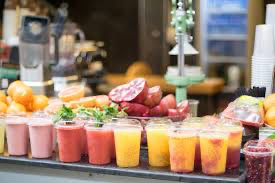
It also has a regulatory framework that draws a sharp and frequently misunderstood line between two very different types of juice operations: retail establishments serving juice directly to customers on-premises, and processors bottling juice for sale to any other business. The compliance obligations on either side of that line are fundamentally different, and crossing it without the correct licensing in place is one of the more common food safety violations CDPH’s Food and Drug Branch encounters in California.
The California Department of Public Health’s Food and Drug Branch (CDPH FDB) is the primary licensing and inspection authority for wholesale juice processors in California. Under California Health and Safety Code Section 110460, any business that manufactures, repacks, labels, or warehouses processed food products in California for sale must register with CDPH FDB through a Processed Food Registration (PFR). This is the firm’s basic health permit to operate as a wholesale food manufacturer in California.
For juice processors specifically, the PFR is not the only compliance layer. Federal law under 21 CFR Part 120, the Juice HACCP regulation, requires that any juice sold as such or used as an ingredient in beverages be processed using a Hazard Analysis and Critical Control Point system that achieves at minimum a 5-log reduction in the pertinent pathogen. California has adopted and enforces this federal framework through the FDB’s inspection program, and juice processors registering with CDPH FDB must pay an additional $250 HACCP fee on top of their base PFR registration fee. If a juice processor fails to have and correctly implement a HACCP system that complies with 21 CFR Part 120, FDA treats the juice as an adulterated product under the Federal Food, Drug, and Cosmetic Act. CDPH FDB enforces these consequences at the state level through its inspection authority.
The Retail Exemption and Why It Does Not Apply to Bottled Juice for Wholesale
The most important compliance question any California juice producer must answer before designing their business model is whether they qualify for the retail exemption from Juice HACCP requirements. The answer determines whether their entire compliance path involves a local retail permit or a CDPH PFR with a full Juice HACCP plan.
A retail food facility that produces fresh juice and serves it only on-site to customers at the establishment does not need a CDPH PFR and does not need to comply with Juice HACCP under 21 CFR Part 120. This retail exemption covers the juice bar that squeezes oranges and hands them across the counter, the smoothie shop that blends fresh produce and serves it immediately, and the restaurant that makes fresh-pressed juice for table service. These operations are regulated under local retail food permits and the California Retail Food Code, not under the PFR framework. Juice produced at a retail establishment and sold directly to consumers without being bottled for off-premises distribution falls within the retail exemption.
The exemption ends the moment the juice leaves the premises for distribution. CDPH FDB’s FAQ on producing juice at retail, updated September 2025, makes this explicit: if a juice producer bottles product and distributes it to other locations, even other locations under the same business ownership, a CDPH PFR is required. If the bottled juice is sold wholesale to retailers, restaurants, distributors, or any other business, a PFR is required. The exemption is for on-site retail service, not for any model that involves distribution.
This distinction trips up many California juice businesses that start as retail operations and gradually expand into wholesale. A juice bar that begins bottling product for delivery to neighboring restaurants or a farmers market booth has crossed from retail into wholesale manufacturing without always recognizing that the licensing and compliance requirements have changed entirely. Operating as a wholesale juice processor without a current PFR is a violation of California Health and Safety Code Section 110460. The product is also subject to treatment as adulterated under 21 CFR Part 120 if the Juice HACCP requirements are not met.
For producers uncertain about which category their operation falls into, CDPH FDB recommends submitting your questions to FDBRetail [at] cdph.ca.gov for retail operations or contacting FDB directly for wholesale operations. The distinction is fact-specific and worth confirming before investing in equipment or launch planning.
The 5-Log Reduction Standard and Why It Is the Core of Every California Juice HACCP Plan
The 5-log reduction requirement under 21 CFR Part 120.24 is the foundational technical requirement of Juice HACCP, and it is the element that most defines what a California wholesale juice processor must build into their production process. The requirement means that the juice processor’s process must reduce the level of the pertinent pathogen by a factor of 100,000, achieving a reduction of five orders of magnitude in the most resistant pathogen reasonably likely to be found in the juice.
The pertinent pathogen varies by juice type. For juices made from citrus fruits, the pertinent pathogen is E. coli O157:H7. For apple juice and apple cider, it is also E. coli O157:H7. For juices made from fruits or vegetables where the pathogen of concern grows or is carried on the surface, such as juices made from raspberries, strawberries, or other produce where Cryptosporidium parvum is a documented hazard, Cryptosporidium may be the pertinent organism. Your hazard analysis must identify the pertinent pathogen for each juice product you produce.
Achieving the 5-log reduction can be accomplished through a variety of methods, and your HACCP plan must document which method or combination of methods you use. Pasteurization, either high-temperature short-time (HTST) or ultra-high temperature (UHT) processing, is the most direct approach and provides the 5-log reduction through thermal lethality. High pressure processing (HPP) is a non-thermal method used by many California cold press juice producers who want to maintain a fresh, minimally processed product profile while meeting the 5-log requirement. UV light treatment of whole fruit surfaces before pressing is a method used by some producers for certain juice types. Combinations of surface treatments, wash steps, and post-pressing treatments can together achieve the required log reduction if validated.
The critical point that California juice producers using any non-thermal method must understand is that the 5-log reduction must be validated, not assumed. Your HACCP plan must document the scientific basis for why your specific process achieves the required reduction for your specific juice type and pertinent pathogen. FDA has published juice HACCP hazards and controls guidance that provides the scientific framework for different processing approaches. CDPH FDB inspectors review the scientific support for your 5-log reduction claim at every inspection, not just the initial licensing visit.
The Critical Control Points California Juice Processors Must Document Every Production Batch
A Juice HACCP plan under 21 CFR Part 120 must include a written hazard analysis for each juice product, a HACCP plan identifying the CCPs and critical limits, monitoring procedures, corrective actions, verification activities including finished product testing for some processing methods, and record-keeping procedures. Here is what California CDPH FDB inspectors look for in those records.
5-log reduction process monitoring: The critical control point in a juice HACCP plan is the step or steps in your process that achieve the required 5-log reduction. For pasteurization, this is the time-temperature combination at which the juice is heated. Your HACCP plan must specify the critical limit, the monitoring procedure that verifies the limit is achieved for each lot, and the corrective action when the limit is not met. For thermal processes, time-temperature recording charts or digital monitoring data must be maintained for every lot processed. A pasteurizer that reaches the required temperature for every lot except one that was interrupted by a malfunction requires a documented corrective action that addresses the disposition of the juice from that lot.
Finished product E. coli testing for applicable processing methods: Juice processors who rely on treatments that do not come into direct contact with all parts of the juice to achieve the 5-log reduction must test finished product for biotype I E. coli under 21 CFR Part 120.25. One 20 mL sample must be taken for each 1,000 gallons of juice produced per production day, or at least once every five working days if less than 1,000 gallons is produced per day. If two samples in a series of seven tests are positive for E. coli, the process must be treated as inadequate and immediate corrective action is required. Your testing records, the sampling protocol, and the laboratory results must be maintained and available for CDPH FDB inspection.
Sanitation Standard Operating Procedures for juice contact surfaces: All surfaces that contact juice before the 5-log reduction step, including whole fruit, conveyor belts, washing equipment, pressing equipment, and transfer lines, must be covered by Sanitation SOPs under 21 CFR Part 120.6. Sanitation SOPs must be written, implemented before juice processing begins each day, and verified. Records of pre-operational sanitation monitoring must be maintained and available for inspection. For post-reduction surfaces including holding tanks, filling equipment, and packaging lines, post-reduction recontamination is a hazard that your HACCP plan must address.
Incoming ingredient sourcing and supplier controls: The source of your produce is a hazard control point. Your HACCP plan must document your produce suppliers as approved sources and include your supplier approval criteria. California’s agricultural environment means produce can carry field-level contamination from irrigation water, wildlife, or field sanitation issues. Your incoming produce receiving procedures must include visual inspection at minimum and, for higher-risk produce types, may require certificates of analysis or supplier verification activities. Incoming lot records must link specific produce lots to specific juice production batches.
Consumer warning label for products sold with the warning exemption: The federal warning statement under 21 CFR Part 101.17(g) is required on any juice that has not been processed to achieve the 5-log reduction. If any of your products use the warning label rather than achieving the full 5-log reduction through processing, that label must be present on every container of that juice. CDPH FDB inspects product labeling as part of every facility inspection, and a juice product without the required warning label that has also not achieved the 5-log reduction is adulterated under federal law.
Maintaining CDPH FDB Compliance Through Annual PFR Renewal and Production Changes
The CDPH PFR is valid for one calendar year from the date of application. Annual renewal is required, and the base registration fee plus the $250 HACCP fee must be paid at each renewal. CDPH FDB recommends submitting PFR applications 30 to 60 days before the start of manufacturing or warehousing. For renewal, the same advance timing applies to avoid any gap in registration status.
Any change to your juice processing operation that could affect the hazard analysis or the critical control points in your HACCP plan requires a plan update. Adding a new juice product, changing your processing method (for example, switching from UV surface treatment to HPP), changing your pertinent pathogen determination based on a new produce type, or changing your produce suppliers in a way that affects your supplier approval documentation are all changes that may require HACCP plan revision. Your HACCP plan must be reassessed whenever product or process changes occur, and the reassessment must be documented.
California producers using HPP should note that HPP equipment qualification and process validation is an ongoing requirement, not a one-time initial step. HPP equipment must be maintained to deliver the validated pressure and dwell time for each product type, and any service event, equipment change, or process deviation must be documented and evaluated for its effect on the validated process. CDPH FDB inspectors will look at HPP equipment maintenance records and process parameter logs alongside HACCP monitoring records when inspecting an HPP juice operation.
The Documentation Failures That Lead to CDPH FDB Enforcement Actions for California Juice Processors
CDPH FDB’s enforcement actions against California juice processors cluster around three categories: operating without a current PFR while distributing juice wholesale, juice products that lack the required consumer warning label and have no documentation of the 5-log reduction process, and HACCP plan documentation that exists on paper but has not been implemented in practice.
The warning label and 5-log reduction documentation gap is particularly common among California cold press juice producers who entered the market as retail operations and expanded into wholesale without a clear understanding of when the Juice HACCP requirements became applicable. A bottled juice product distributed wholesale without either the 5-log reduction process documentation or the consumer warning label is adulterated under federal law and subject to enforcement action regardless of the producer’s intent.
Monitoring records that cannot be tied to specific production lots are the most common HACCP implementation failure. A temperature chart for a pasteurizer that shows daily operating parameters but cannot be matched to specific batches of finished juice leaves CDPH FDB with no way to verify that the 5-log reduction was achieved for any particular lot. Batch-level records that connect the monitoring data for the critical control point to the specific production lot, and that lot to its distribution destination, are the foundation of a defensible HACCP system. When those connections exist and the records are complete, investigations and inspections resolve quickly. When they do not exist, the default presumption is non-compliance.
Sanitation records that describe the required procedures in the SSOP but have blank verification columns for specific production dates are treated the same way: evidence that the sanitation program exists on paper but was not being implemented consistently in the facility.
The inspection you just passed? It will happen again.
California operations are re-inspected regularly and every batch, temperature log, and corrective action needs to be documented every time. HACCPEasy Platform gives your team a digital compliance system so the next inspector visit is a non-event.
- ✓ Operators log batches, temps, and corrective actions in real time
- ✓ Require photo evidence of pH readings, equipment checks, or any critical step
- ✓ If-Then logic flags deviations and locks the workflow until resolved
- ✓ One tap exports your full 180-day audit history when an inspector walks in
Start your 30-day free trial — no credit card required
Bottom Line
California wholesale juice processors must hold a current CDPH Processed Food Registration and comply with Juice HACCP under 21 CFR Part 120, including achieving a minimum 5-log reduction in the pertinent pathogen for each juice type. The $250 additional HACCP fee applies on top of the base PFR fee. The retail exemption from Juice HACCP applies only to juice produced and served on-site to customers; the moment juice is bottled and distributed to any other location or business, the PFR and Juice HACCP requirements apply. A juice product sold wholesale without either a documented 5-log reduction process or the required consumer warning label is adulterated under federal law. Batch-level monitoring records, finished product E. coli testing for applicable processing methods, and complete sanitation verification records are what CDPH FDB inspectors review at every inspection.
FAQ
- Does my California juice bar need a CDPH license and Juice HACCP plan? If you serve juice only on-site to customers at your retail establishment, you operate under a local retail permit and do not need a CDPH Processed Food Registration or Juice HACCP compliance. If you bottle juice and distribute it to any other business or location, including wholesale accounts, farmers markets, or other branches of your own business, a CDPH PFR and Juice HACCP compliance are required. The retail exemption applies to on-site service, not to any distribution model. Questions about your specific situation can be directed to CDPH FDB at FDBRetail [at] cdph.ca.gov for retail operations or to FDB directly for wholesale operations.
- What is the 5-log reduction requirement for California juice processors? The Juice HACCP regulation at 21 CFR Part 120.24 requires that your juice processing system achieve a minimum 5-log (100,000-fold) reduction in the pertinent pathogen for your specific juice type. For most citrus and apple juices, the pertinent pathogen is E. coli O157:H7. The 5-log reduction must be achieved by your processing method, whether pasteurization, HPP, UV treatment, or another validated approach, and must be maintained for a period equivalent to the shelf life of the product under normal and moderate abuse conditions. Your HACCP plan must document the scientific basis for why your process achieves the required reduction.
- Can I sell unpasteurized raw juice wholesale in California? You can sell juice that has not been pasteurized wholesale in California, but only if the juice has been processed to achieve the 5-log reduction through a validated alternative method such as HPP, UV, or another approved treatment, or if every container of the juice bears the consumer warning statement required by 21 CFR Part 101.17(g). A juice product sold wholesale that has neither the 5-log reduction documentation nor the required warning label is treated as adulterated under federal law. The warning label exemption applies to retail direct-to-consumer sales; wholesale distribution requires either the 5-log reduction process or the warning label on every container.
- How much does the CDPH juice processor license cost in California? The CDPH Processed Food Registration for juice processors includes a base registration fee plus a $250 additional HACCP fee required for all firms subject to mandatory Juice HACCP under 21 CFR Part 120. The $250 fee is explicitly required on the CDPH PFR application (CDPH 8611) and supports ongoing inspection operations of firms with Juice HACCP requirements. Both fees must be paid at initial registration and at each annual renewal. Applications should be submitted 30 to 60 days before the start of manufacturing. Contact CDPH FDB for current fee information.